
Challenge
Sarah Flint’s existing Klaviyo setup relied on standard flow triggers for replenishment and repeat orders. While effective at a baseline level, they were still tied to static rules and fixed timing assumptions—meaning purchase intent was often missed or mistimed across customers with different buying cycles.
Solution
We implemented Retentics inside Klaviyo to replace static flow triggers with AI-driven timing logic. Instead of triggering based on fixed events, flows were powered by predicted purchase intent—allowing replenishment, winback, bounce back, and other key journeys to activate based on when customers were actually likely to buy again.
Result
In luxury footwear, relying on standard flow triggers for replenishment and repeat orders is a recipe for leaving money on the table. We worked with Sarah Flint to move beyond event-based timers and toward a predictive model that identifies purchase intent before the customer even returns to the store.
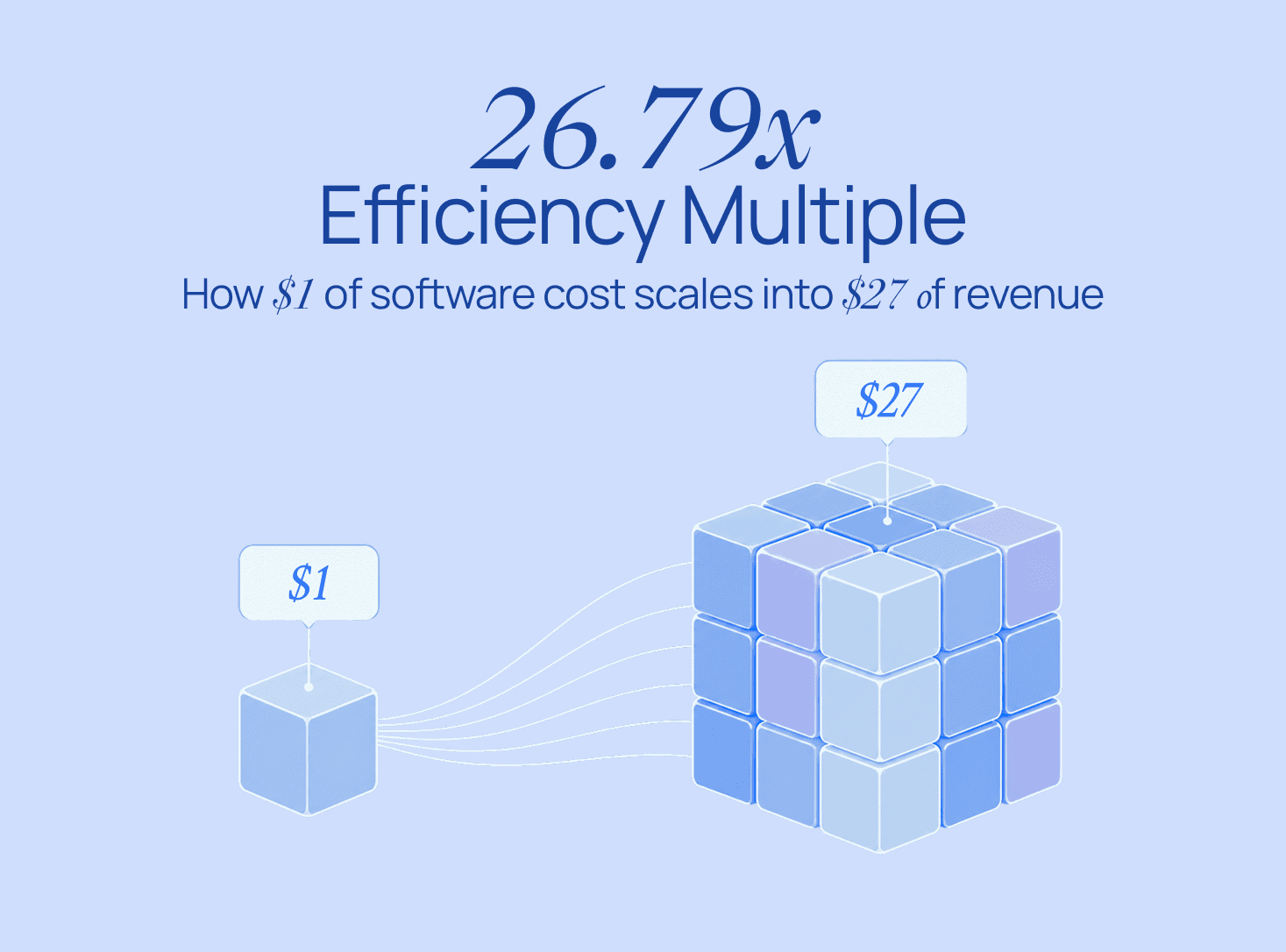
By replacing standard flow triggers with Retentics inside Klaviyo, Sarah Flint didn’t just optimize existing automations; they unlocked a system that generates nearly $27 for every $1 spent by reaching customers at the exact moment they’re most likely to buy again.
By targeting forecasted intent rather than static trigger rules, they turned routine replenishment and repeat order flows into a scalable revenue multiplier.
The Efficiency Framework
We didn't look at open rates or clicks. Instead, we looked at the unit economics on how much money our tool makes compared to what it costs.
The Software-to-Sales Multiple: We compared the monthly cost of Retentics against the total revenue it created.
The "Always-On" Revenue: These five AI flows run 24/7. They make sure the brand reaches out exactly when a customer is ready for their next pair.
The Main Metric: 26.79x Revenue Efficiency
The clearest way to measure performance is through revenue efficiency — how much revenue is generated per $1 of software spend.
The Sarah Flint Result: 26.79x
The Impact: For every $1 invested in Retentics, the engine generates $26.79 in attributed revenue. This level of leverage makes it one of the most efficient tools in the brand’s tech stack.
The 12.02% Revenue Contribution: A New Flow Standard
Efficiency is only half the story; the other half is scale. While standard automation handles the basics, the AI-driven Retentics engine has moved from a "supplemental" tool to a core pillar of the Sarah Flint digital strategy.
In a highly optimized Klaviyo setup with dozens of active triggers, these five AI-powered flows now account for 12.02% of total flow revenue.
The Sarah Flint Result: 12.02% Revenue Contribution.
The Impact: By replacing generic timers with predictive intelligence, a small subset of the email library now drives a double-digit share of automated revenue. High-intent timing consistently outperforms high-volume sending.
The AI-Powered Flow Suite
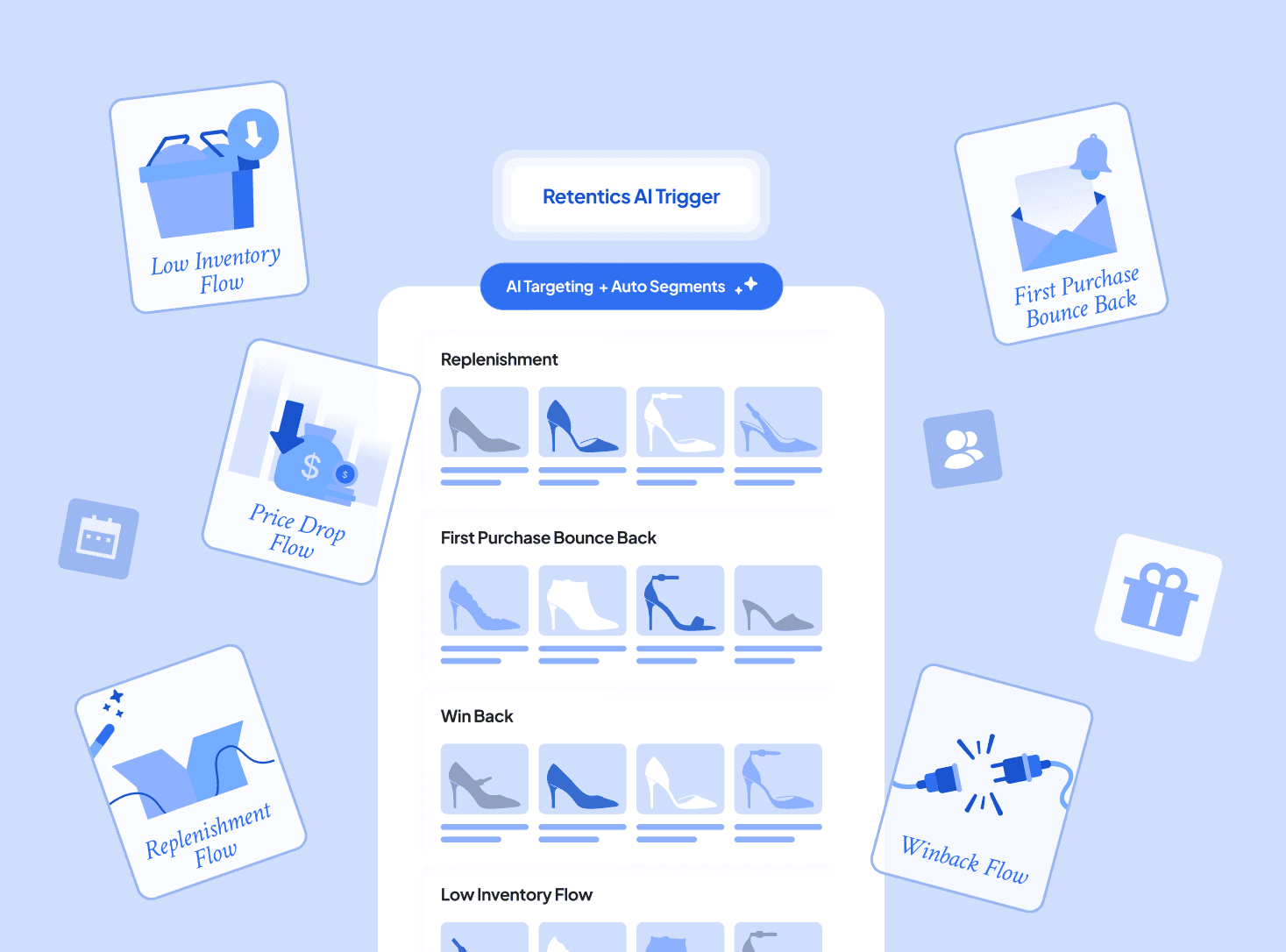
We set up five specific flows in Klaviyo to capture revenue at the right moments:
Replenishment Flow: Reminds customers to reorder exactly when they are likely running out.
Low Inventory Flow: Sends a high-urgency note when a customer’s favorite item is almost out of stock.
First Purchase Bounce Back: Strikes while interest is high to turn a first-time buyer into a repeat customer.
Winback Flow: Reaches out to old customers at the perfect time to bring them back.
Price Drop Flow: Alerts shoppers when a product they liked goes on sale.
Inside the Engine: A Real Look at the "Perfect Round Toe Pump"
This isn't a guess — it’s a direct look at the actual data inside Sarah Flint’s account. While our system tracks hundreds of different buying patterns across the store, this deep dive into the Perfect Round Toe Pump shows how a customer's needs change over time.
One Segment, Multiple Intent Windows: Even within this one group of customers, the "best next move" changes. Our data shows several different peaks in interest, with two main windows driving most of the repeat sales:
The 149-Day Pulse (Style Expansion): When a customer returns quickly (around 5 months), they usually aren't looking for a replacement. Since they already know the shoes fit and feel great, they are most likely to buy a new color (like Cognac) to grow their collection.
The 258-Day Pulse (Core Replenishment): At the 8.5-month mark, the goal shifts to a "Refresh" cycle. After nearly three-quarters of a year of wear, the customer typically returns to re-order a fresh pair of their original, classic black pumps.
This proves that "ready to buy" is always changing. Whether the system triggers a new color or a fresh basic, it recalibrates in real-time to match the actual lifecycle of the customer’s wardrobe.
The Final Result
The Sarah Flint Result: 26.79x Efficiency Score. Retentics generates $26.79 in attributed revenue for every $1 spent, paying for itself within the first few weeks and continuing to compound from there. The takeaway is straightforward: growth didn’t come from increasing volume, but from improving timing. By automating repeat purchase moments, Sarah Flint built a system that consistently delivers a return with no additional manual work.